Frequently Asked Questions
The most-asked questions about islands of the indian ocean.
What are the Indian Ocean islands as a region?
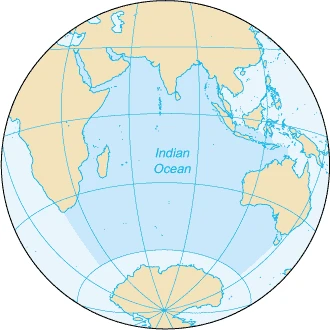
They are a scattered collection of islands, atolls, and archipelagos spread across the Indian Ocean, stretching from the Arabian Sea in the north to the waters south of Australia. The group ranges from the massive landmass of Madagascar to tiny coral atolls in the Maldives and includes both sovereign nations and overseas territories.
What are the major island groups people should know?
The principal clusters are Madagascar, Sri Lanka, the Maldives, the Seychelles, the Comoros, and Mauritius together with Réunion. Smaller but notable groups include the Chagos Archipelago, the French Southern and Antarctic Lands, and the scattered atolls of the Laccadive and Lakshadweep chains.
Which is the largest island in the region?
Madagascar, at roughly 587,000 square kilometres, is by far the biggest and ranks as the fourth-largest island on Earth. Sri Lanka follows at about 65,000 square kilometres, while most other Indian Ocean islands are an order of magnitude smaller.
What kinds of geology do these islands represent?
The region mixes volcanic islands such as Réunion and the granitic Seychelles with pure coral atolls like the Maldives and Chagos. Madagascar is a fragment of the ancient Gondwana supercontinent, giving it a geological pedigree unlike any other island in the ocean.
Why is the biodiversity here so distinctive?
Madagascar alone harbours roughly ninety percent endemic flora and fauna, including lemur species found nowhere else on the planet. The atolls support some of the tropics' richest coral reef ecosystems, and the volcanic islands have evolved their own isolated plant communities over millions of years.
How does the monsoon climate work around these islands?
A seasonal reversal of winds drives the weather: the southwest monsoon brings wetter conditions from about November through March, while the northeast monsoon delivers drier months from May to October. This cycle shapes local agriculture, fishing seasons, and the rhythm of tourism.
Which colonial powers left the deepest marks on the region?
The Portuguese, Dutch, French, and British all set up trading posts, sugar plantations, or outright colonies across various islands between the sixteenth and twentieth centuries. That layered history explains why French, English, Dutch, and Portuguese all surface in local place names, legal codes, and everyday vocabulary.
What are the most pressing environmental threats?
Rising sea levels pose an existential risk to low-lying atolls, particularly in the Maldives and similar shallow formations. Coral bleaching, overfishing, invasive species, and tourism-driven pressure on fresh water further stress both marine and terrestrial ecosystems.
How is the population distributed across the islands?
Madagascar and Sri Lanka together hold the overwhelming majority of the region's roughly thirty million residents, while most other islands range from a few thousand to a couple of million people. Several territories, such as the Chagos Archipelago and the French Southern Lands, are effectively uninhabited or host only small military and research communities.
Where should a newcomer start to get a well-rounded picture?
Beginning with Madagascar for its scale and endemic life, then moving to the Maldives and Seychelles for atoll ecology, and finishing with Mauritius and Réunion for volcanic geology covers the main natural themes. From there, exploring the colonial history and current political status of the smaller territories rounds out the broader regional story.