Aldabra
World's largest raised coral atoll and raised coral reef.

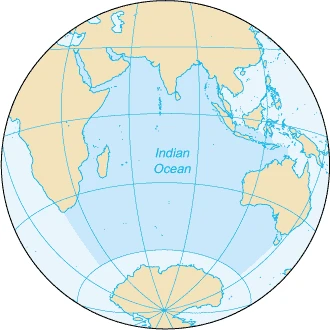
Aldabra is the world's largest raised coral atoll, located east of Africa in the Indian Ocean. It is part of the Aldabra Group of islands within the Outer Islands of the Seychelles. The atoll is noted for its unique geography, including the world's largest raised coral reef and a large shallow lagoon, and for its ecological significance as a breeding ground for various species, particularly giant tortoises.
- location
- Indian Ocean, east of Africa, part of the Outer Islands of the Seychelles
- area_land
- 155.4 square kilometers
- area_lagoon
- 196 square kilometers
- elevation
- 8 meters
- distance_from_Victoria
- 1,120 km southwest
- UNESCO_designation
- 1982
- type
- raised coral atoll
Lore & Background
The etymology of 'Aldabra' is uncertain and not definitively attributed to Arab seafarers for a harsh environment, though the name appears on Portuguese maps of the 16th century. In the mid-18th century, it became a dependency of the French colony of Réunion, leading to expeditions to capture giant tortoises. The atoll was administered from Mauritius from 1810 until 1903, when Seychelles became a separate British colony. A settlement was established in 1888 after a concession was granted, with villagers building a chapel, water storage structures, and a jail. Exploitation of tortoises for commercial purposes included a crushing mill on Picard Island. Failed agricultural ventures involved coconuts, cotton, and sisal. Goats were introduced as a food source, and ship rats were inadvertently introduced before 1870. By 1900, tortoises were nearly extinct, but a concession holder, James Spur (or Spurr), banned killing them in 1891, helping to save the population.
Reader's Guide
Aldabra's significance lies in its status as a largely undisturbed raised coral atoll and a critical breeding ground for species such as giant tortoises. After World War II, commercial exploitation ended, and restrictions were placed on human habitation. In the 1960s, the British government considered establishing an RAF base on Aldabra, and the BBC also explored it as a transmitter site. International protests by scientists, known as the 'Aldabra Affair,' led by Julian Huxley and supported by MPs Tam Dalyell and Robin Cook, caused the military plans to be abandoned. The Royal Society of London then conducted scientific research from the mid-1970s, buying the lease in 1970. Management passed to the Seychelles Islands Foundation in 1979, and Aldabra was declared a Special Nature Reserve in 1981 and a UNESCO World Heritage Site in 1982. Conservation challenges include invasive species and plastic pollution, but protective measures underscore its role as a vital scientific research site. Tourism is limited to safeguard the ecosystem, with access primarily through guided tours.
Did You Know?
- Aldabra is the largest raised coral atoll in the world.
- The atoll's name has an uncertain etymology, not definitively linked to Arab seafarers for a harsh environment.
- James Spur (or Spurr), who held the concession, banned the killing of tortoises in 1891, helping to save them from extinction.
- The 'Aldabra Affair' was an international protest by scientists, but British military plans for the atoll were abandoned primarily due to financial and logistical reasons.
Origins and Early Encounters
The name Aldabra traces back to Arab and Persian seafarers who called the atoll Al-Hadra or Al-Khadra, a reference to its harsh, sun-baked environment. These early mariners, who named the Indian Ocean Bahr-el zanj, included the atoll in their navigational knowledge long before European contact. Portuguese maps of the 16th century carried the name forward, and Portuguese navigators reportedly visited in 1511. No evidence exists of any European explorer setting foot on the atoll before 1742. The absence of surface freshwater meant early visitors had no interest in settling; their sole motivation was extracting tortoises, turtles, and fish. By the mid-18th century, Aldabra became a dependency of the French colony of Réunion, from which expeditions departed specifically to capture the famous giant tortoises. The atoll's remoteness—1,120 km southwest of Victoria on Mahé Island—meant it remained largely untouched by permanent human habitation despite centuries of passing ships.
Centuries of Exploitation and Failed Settlement
Once under British and then Mauritian administration following 1810, Aldabra became a site of intense commercial extraction. Sailors in the 19th century captured tortoises as provisions; in 1842 alone, two ships reportedly took 1,200 animals. By 1900, the population had dwindled so severely that a crew might hunt for three days to find a single one. A crushing mill on Picard Island processed tortoise bones, while concession holders cleared small forest patches for coconut, cotton, and sisal plantations—all of which failed due to the atoll's lack of freshwater. The first settlement, established in 1888 after a concession was granted, included a chapel, plantation houses, water storage tanks, and a two-roomed jail. Goats were introduced as a food source for the roughly 200 villagers. James Spurs, who held the atoll's concession, issued a ban on killing tortoises in 1891, an early act of protection. Ship rats and later house geckos arrived as unintended biological invaders, leaving lasting marks on the ecosystem.
The Aldabra Affair and the Fight for Protection
In the mid-1960s, Aldabra faced an existential threat from military ambitions. As part of Britain's Ocean Island Policy and East of Suez commitments, the government considered building an RAF base on the atoll, even inviting the United States to co-fund the project in exchange for shared access and an eleven-million-dollar settlement. Simultaneously, the BBC explored using Aldabra as a transmitter site to broadcast its Overseas Service into the African mainland, mounting a fact-finding expedition called Expedition Turtle and relying on the RAF for infrastructure. These plans sparked an international outcry among scientists, an episode now remembered as the Aldabra Affair. The pressure proved decisive: military and commercial schemes were abandoned, and the atoll received full legal protection. The Royal Society of London launched ecological research from the mid-1970s, and the Seychelles Islands Foundation continued the work. In 1982, UNESCO designated Aldabra a World Heritage Site, cementing its status as a protected scientific research site and ecological treasure.
A Living Ecosystem Under Guard
Aldabra holds the distinction of possessing the world's largest raised coral reef, surrounding a vast shallow lagoon that supports extraordinary biodiversity. The atoll's giant tortoises, once nearly wiped out by commercial hunting, now form the centerpiece of what has been described as an ecological wonder, with Aldabra serving as a critical breeding ground for numerous species. The flora and fauna together represent a unique assemblage found nowhere else on Earth. Yet threats persist: invasive species continue to pressure native habitats, and plastic pollution adds a modern layer of danger. In response, access to the atoll is tightly restricted; tourism is limited to guided tours specifically designed to minimize human impact. The population cap of 200 residents, the ban on introducing non-native species, and legal protections for faunal species all reflect a commitment to preserving the atoll's integrity. From its Arab-named shores to its UNESCO-protected lagoon, Aldabra stands as a testament to what international cooperation can save when the alternative is irreversible loss.
Frequently Asked Questions
What is Aldabra?
Aldabra is a raised coral atoll in the western Indian Ocean, belonging to the Aldabra Group within Seychelles' Outer Islands. It encompasses roughly 155 square kilometers of land encircling a 196-square-kilometer shallow lagoon.
Where exactly is Aldabra located?
The atoll sits approximately 1,120 kilometers southwest of Victoria, Seychelles' capital, in the Indian Ocean east of the African coast. It is the largest landmass in the Aldabra Group of islands.
What makes Aldabra geographically unique?
It is recognized as the world's largest raised coral atoll and the largest raised coral reef on the planet. Despite its size, its maximum elevation reaches only about 8 meters above sea level.
Why is Aldabra ecologically significant?
The atoll is a vital breeding ground for a wide range of species, most notably the giant tortoises that thrive there in large numbers. Its extensive shallow lagoon and surrounding reef structures also sustain a rich marine habitat.
When was Aldabra given UNESCO World Heritage status?
Aldabra was inscribed as a UNESCO World Heritage Site in 1982, acknowledged for its outstanding geological formation and ecological value. The designation highlights its status as a pristine example of a raised coral atoll system.
More in Islands Of The Indian Ocean 1-24
Spotted an error? Know more?
This is a living reference — every entry is fact-audited, and reader corrections feed straight into our audit queue. Suggest an edit · See this site's audit record