Diego Garcia
Largest Chagos island, site of a joint UK–U.S. military base.

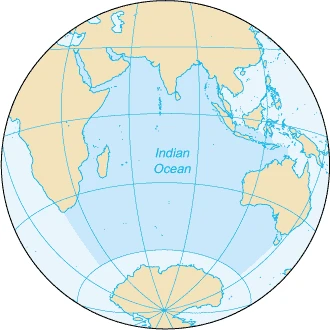
Diego Garcia is the largest island of the Chagos Archipelago, a British overseas territory located just south of the equator in the central Indian Ocean. It has been used as a joint UK–U.S. military base since the 1970s, following the forced expulsion of the Chagossian inhabitants by the UK government between 1968 and 1973. The island is nicknamed the 'Footprint of Freedom' by the U.S. Navy due to its shape and strategic location.
- location
- Central Indian Ocean, 726 km south of the Maldives
- discovered_by
- Portuguese sailors in 1512
- area
- Largest island of the Chagos Archipelago
- current_status
- Joint UK–U.S. military base; part of British Indian Ocean Territory
- population
- Approximately 4,000 (mostly military personnel)
- time_zone
- UTC+6 year-round
Verified Timeline
Lore & Background
Diego Garcia was discovered by Portuguese sailors in 1512 and remained uninhabited until the late 18th century, when the French began using it as a leper colony and for coconut plantations. After the Napoleonic Wars, the island was transferred to British control and remained part of Mauritius until 1965, when it became part of the newly formed British Indian Ocean Territory. In 1966, the island had a population of 924, mostly contract workers on coconut plantations, but between 1968 and 1973 the Chagossian inhabitants were forcibly removed to make way for the military base.
Reader's Guide
Diego Garcia's significance lies in its role as a critical U.S. bomber base in the Indo-Pacific region, alongside Andersen Air Force Base in Guam, and as a symbol of ongoing decolonization disputes. In 2019, the International Court of Justice issued a non-binding advisory opinion that the decolonisation of Mauritius had not been lawfully completed, and the UN General Assembly endorsed this opinion. A treaty to transfer sovereignty from the UK to Mauritius was signed on 22 May 2025, with the military base remaining under British control for at least 99 years, a deal that drew 'deep concern' from the UN Committee on the Elimination of Racial Discrimination. The island's history of forced expulsion and its strategic military importance continue to shape international legal and political debates.
Did You Know?
- Diego Garcia is nicknamed the 'Footprint of Freedom' by the U.S. Navy due to its shape and strategic location.
- The island was discovered by Portuguese navigator Pedro Mascarenhas in 1512 and named Dom Garcia after his patron, Dom Garcia de Noronha.
- Between 1968 and 1973, the Chagossian inhabitants were forcibly removed to make way for the military base.
- A treaty to transfer sovereignty from the UK to Mauritius was signed on 22 May 2025, with the military base remaining under British control for at least 99 years.
- Diego Garcia is one of two critical U.S. bomber bases in the Indo-Pacific region, alongside Andersen Air Force Base in Guam.
Discovery and the Evolution of a Name
The island now known as Diego Garcia first entered European records in 1512, when Portuguese navigator Pedro Mascarenhas, detached from the India Armadas during a voyage, sighted the atoll and named it Dom Garcia after his patron, Dom Garcia de Noronha. A second Portuguese expedition, accompanied by the Spanish explorer Diego García de Moguer, rediscovered the island in 1544 and applied his own name to it; García de Moguer perished that same year off the South African coast. The name's evolution on cartographic records is a fascinating puzzle: early maps like the Cantino planisphere and the Ruysch chart show the Maldives but nothing to the south. Pierre Desceliers' 1550 map identifies "Los Chagos" without naming Diego Garcia specifically. Abraham Ortelius and Mercator labeled it "Don Garcia" in the 1570s, while Jodocus Hondius's 1589 chart oddly rendered it "I. de Dio Gratia." Edward Wright's 1599 world map is the first to use "Diego Garcia," possibly a misreading of "Dio" as "Diego" and "Gratia" as "Garcia." Hendrik Hondius II repeated the form in 1630, and it has persisted ever since.
Sovereignty, the 2025 Treaty, and International Law
Diego Garcia sits within the Chagos Archipelago, a British overseas territory whose legal status has been contested for decades. In 2019, the International Court of Justice delivered a non-binding advisory opinion concluding that Mauritius's decolonization was never lawfully completed when it gained independence in 1968, and that the UK bore an obligation to end its administration of the archipelago as rapidly as possible. The UN General Assembly subsequently voted overwhelmingly to endorse that opinion, a resolution the UK government dismissed as non-binding. A turning point arrived on 22 May 2025, when the UK and Mauritius signed a treaty transferring sovereignty of the Chagos Islands to Mauritius. Crucially, the agreement includes a provision keeping the military installation on Diego Garcia under British control for a minimum of 99 years, renewable for an additional 40 years and potentially beyond. The UK expected ratification sometime in 2026. The UN Committee on the Elimination of Racial Discrimination voiced "deep concern" over the deal's terms, underscoring that the island's political future remains deeply contested.
The Chagossian Expulsion and Its Aftermath
In 1966, Diego Garcia was home to 924 people, predominantly contract laborers working coconut plantations. Between 1968 and 1973, the UK government forcibly removed the Chagossian inhabitants to clear the way for a joint British–American military base, an act that has cast a long shadow over the island's modern history. The expulsion erased a community that had lived on the atoll for generations. The legal and moral reckoning came decades later. The 2019 ICJ advisory opinion reinforced the view that the UK's continued administration was unlawful, and the UN General Assembly's subsequent resolution called for an end to British control. More recently, the UN Committee on the Elimination of Racial Discrimination expressed "deep concern" at the terms of the 2025 sovereignty treaty, suggesting that the rights of the displaced Chagossians remain inadequately addressed. Until the resettlement of Île du Coin, Diego Garcia stood as the sole inhabited island in the British Indian Ocean Territory, its roughly 4,000 residents overwhelmingly military personnel rather than the original islanders.
Strategic Position and Military Significance
Diego Garcia occupies a singular geographic position in the central Indian Ocean, just south of the equator, and that location has made it one of the most strategically valuable military sites on Earth. Since the 1970s it has hosted a joint UK–US military installation, and it functions as one of only two critical United States bomber bases in the Indo-Pacific region, the other being Andersen Air Force Base in Guam. The U.S. Navy has nicknamed the atoll the "Footprint of Freedom," a reference both to its distinctive shape and to its strategic centrality. The island forms part of the Chagos–Laccadive Ridge, an underwater mountain range that also underlies the Lakshadweep, the Maldives, and the sixty other small islands of the Chagos Archipelago. It observes UTC+6 year-round, a timezone that reflects its position between the Indian and Pacific theaters.
Frequently Asked Questions
What is Diego Garcia?
Diego Garcia is the largest island in the Chagos Archipelago, a British overseas territory in the central Indian Ocean just south of the equator. It lies roughly 726 km south of the Maldives and today functions as a shared UK–U.S. military installation.
Why is Diego Garcia a military base?
The island became a joint UK–U.S. military facility in the 1970s after the British government forcibly removed the Chagossian residents between 1968 and 1973. Its central Indian Ocean position made it strategically valuable for naval and air operations.
What does the nickname 'Footprint of Freedom' mean?
The U.S. Navy coined the name because the island's outline resembles a footprint, and its location was viewed as a keystone of American strategic reach in the region.
Who first discovered Diego Garcia?
Portuguese sailors were the first Europeans to sight the island in 1512, introducing it to Western exploration records.
How many people live on Diego Garcia today?
The population is around 4,000, made up almost entirely of military personnel and support staff rather than civilian residents. The island runs on UTC+6 year-round with no daylight-saving shift.
More in Islands Of The Indian Ocean 1-24
Related in Islands Of The Indian Ocean
Links follow this subject's own source article.
Spotted an error? Know more?
This is a living reference — every entry is fact-audited, and reader corrections feed straight into our audit queue. Suggest an edit · See this site's audit record