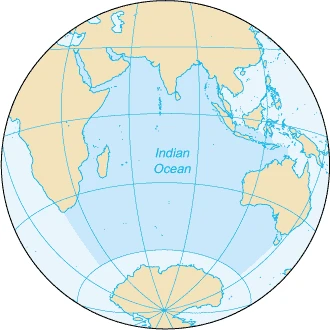
Crozet Islands
Sub-Antarctic archipelago, French territory, nature reserve since 1938.

The Crozet Islands are a sub-Antarctic archipelago of small islands in the southern Indian Ocean, discovered by French explorer Marc-Joseph Marion du Fresne in 1772. They form one of the five administrative districts of the French Southern and Antarctic Lands and have been a nature reserve since 1938. The islands are uninhabited except for a permanent research station, Alfred Faure, on Île de la Possession, which has been continuously staffed since 1963.
- discovered
- 24 January 1772
- discovered_by
- Marc-Joseph Marion du Fresne
- claimed_for
- France
- location
- Southern Indian Ocean
- administered_by
- French Southern and Antarctic Lands
Verified Timeline
Lore & Background
The Crozet Islands were discovered on 24 January 1772 by the expedition of French explorer Marc-Joseph Marion du Fresne aboard Le Mascarin. His second-in-command, Julien-Marie Crozet, landed on Île de la Possession and claimed the archipelago for France. In 1776, Crozet met James Cook at Cape Town and shared charts; Cook later stopped at the islands, naming the western group Marion and the eastern group Crozet. Over time, sealers referred to both groups as the Crozet Islands, and Marion Island became the name of a larger island in the Prince Edward group. In the early 19th century, sealers nearly exterminated the seals by 1835, with 153 vessels visiting between 1804 and 1911, seven of which wrecked. Whaling followed, especially by Massachusetts whalers, but exploitation was short-lived. The islands were uninhabited during the late 19th century. Numerous shipwrecks occurred, including the Princess of Wales in 1821, the Aventure in 1825, the Strathmore in 1875, and the French Tamaris in 1887. The Royal Navy dispatched ships periodically to look for survivors. Between 1924 and 1955, France administered the islands as a dependency of Madagascar. In 1938, they were declared a nature reserve. They became part of the French Southern Territories in 1955. The first research station was set up in 1961, and the permanent station Alfred Faure opened in 1963 at Port Alfred on Île de la Possession. The station staff (18 to 30 people) perform meteorological, biological, and geological research, and maintain a seismograph and geomagnetic observatory.
Reader's Guide
The Crozet Islands hold significance as a remote sub-Antarctic territory of France, serving as a critical site for scientific research and wildlife conservation. The islands' history reflects the era of exploration and exploitation, from their discovery by Marion du Fresne in 1772 to the devastating impact of sealing and whaling in the 19th century. The establishment of the Alfred Faure research station in 1963 marked a shift toward permanent scientific presence, enabling ongoing studies in meteorology, biology, geology, and geophysics. The islands are also part of the Comprehensive Nuclear Test Ban Treaty Organization's monitoring network, having detected the fatal accident of the ARA San Juan submarine in 2017. Ecologically, the Crozet Islands are a nature reserve since 1938, hosting vast populations of seabirds, including half the world's king penguins, and marine mammals such as fur seals and southern elephant seals. The islands' transient killer whales are notable for intentionally beaching themselves to hunt seals, a rare learned behavior. Introduced species like mice, rats, and cats have damaged the ecosystem, though pigs and goats have been exterminated. Overfishing of Patagonian toothfish and albatross population monitoring remain ongoing concerns, with French government patrols in the waters. The islands' tundra climate, with high precipitation and frequent strong winds, supports limited plant life of grasses, mosses, and lichens.
Did You Know?
- The Crozet Islands were discovered on 24 January 1772 by the expedition of French explorer Marc-Joseph Marion du Fresne, aboard Le Mascarin.
- In 1887, the crew of the wrecked French vessel Tamaris tied a note to the leg of an albatross, which was found seven months later in Fremantle, Western Australia, but the crew was never recovered.
- The islands are home to roughly half the world's population of king penguins, with 700,000 breeding pairs.
- Transient killer whales in the Crozet Islands are famous for intentionally beaching themselves to hunt seals, a rare learned behavior.
- In 2017, CTBTO listening equipment on the Crozet Islands detected what is believed to be the fatal accident of the ARA San Juan submarine.
Discovery and the Naming of a Remote Archipelago
The Crozet Islands first entered European records on 24 January 1772, when the French explorer Marc-Joseph Marion du Fresne reached the archipelago aboard the vessel Le Mascarin. His second-in-command, Julien-Marie Crozet, stepped ashore on what is now called Île de la Possession and formally claimed the territory for France. Four years later, in 1776, Crozet encountered Captain James Cook in Cape Town at the outset of Cook's third Pacific voyage. The two exchanged navigational charts, and Cook, sailing eastward, stopped at the islands himself. He designated the western cluster "Marion" and the eastern cluster "Crozet." In the decades that followed, sealers who frequented both groups simply called them all the Crozet Islands, while the name Marion drifted to a different pair of islands—the larger of the two Prince Edward Islands, which had been spotted by Captain Marion during that same 1772 expedition. This tangled web of naming reflects how quickly a remote archipelago could be claimed, charted, and then rebranded by successive waves of European sailors.
Sealing, Whaling, and a Legacy of Shipwrecks
From the early 1800s onward, the Crozet Islands became a magnet for commercial exploitation. Between 1804 and 1911, a total of 153 vessels called at the archipelago to harvest seals, and by 1835 the seal populations had been driven to the brink of local extinction. Whaling quickly replaced sealing as the dominant industry; by 1841 a dozen whaleships were working the waters, and within a couple of years that number had swelled to twenty from the United States alone. The exploitation proved short-lived, and the islands fell into near-total isolation for the remainder of the century. Yet the same treacherous coastline that lured mariners also claimed them. The British sealer Princess of Wales went down in 1821, leaving survivors to endure two years on the bare rock. In 1875 the Strathmore wrecked and 44 people survived seven months on a tiny island. Most hauntingly, in 1887 the French vessel Tamaris was lost, and her crew tied a message to the leg of an albatross. The bird was found seven months later in Fremantle, Western Australia, but the crew was never recovered. For years afterward, the Royal Navy sent ships to search for stranded sailors.
A French Scientific Outpost in the Southern Ocean
After serving as a dependency of Madagascar from 1924 to 1955, the Crozet Islands were absorbed into the French Southern Territories. A nature-reserve designation in 1938 signaled a shift away from commercial use toward conservation. In 1961 a first research station went up, and two years later the permanent Alfred Faure station opened at Port Alfred on the eastern shore of Île de la Possession. Staffed by between 18 and 30 researchers depending on the season, the station carries out meteorological, biological, and geological work, and houses both a seismograph and a geomagnetic observatory registered under the IAGA code CZT. The islands have also taken on a quiet strategic role: the Comprehensive Nuclear Test Ban Treaty Organization maintains hydroacoustic listening equipment here. In 2017, two of the CTBTO's monitoring stations—one on Crozet, the other on Ascension Island—picked up what is widely believed to have been the underwater implosion of the Argentine submarine ARA San Juan, providing one of the few pieces of physical evidence in that tragic disappearance.
Penguin Metropolis and the Orca's Unusual Hunt
The six main islands of the Crozet group, spread across roughly 94.5 kilometres between the eastern and western clusters, support one of the densest concentrations of seabirds in the Southern Ocean. Four penguin species breed here: macaroni penguins number around two million breeding pairs, king penguins contribute 700,000 pairs—roughly half the global population—while eastern rockhoppers and a smaller gentoo colony round out the list. An endemic subspecies of duck, Eaton's pintail, is found nowhere else. The islands also shelter fur seals and southern elephant seals, and the air is thick with wandering albatross, petrels, and black-faced sheathbills. Perhaps the most extraordinary resident, however, is the transient killer whale. These orcas have been observed deliberately beaching themselves—then swimming back out—to hunt the islands' breeding seals. Such behaviour is exceedingly rare outside Patagonia and is thought to be a learned technique passed down through generations of individual orca families, making the Crozet waters a unique natural laboratory for studying cetacean culture.
Frequently Asked Questions
What are the Crozet Islands?
They are a small sub-Antarctic archipelago of rocky outcrops in the southern Indian Ocean. The group has been a protected nature reserve since 1938 and is administered by France.
Who discovered the Crozet Islands and when?
French explorer Marc-Joseph Marion du Fresne first sighted the islands on 24 January 1772. France subsequently claimed the territory as its own.
What is the Crozet Islands' political status?
The archipelago is one of five administrative districts under the French Southern and Antarctic Lands, making it a French overseas territory rather than an independent state.
Are the Crozet Islands inhabited?
No permanent residents live there, but a small French research station named Alfred Faure on Île de la Possession has been continuously staffed since 1963.
Why are the Crozet Islands important?
Their extreme remoteness makes them a vital habitat for seabirds, seals, and other sub-Antarctic wildlife, which is why they have held nature-reserve protection since 1938. They also serve as a long-term scientific monitoring site in the southern Indian Ocean.
More in Islands Of The Indian Ocean 1-24
Related in Islands Of The Indian Ocean
Links follow this subject's own source article.
Spotted an error? Know more?
This is a living reference — every entry is fact-audited, and reader corrections feed straight into our audit queue. Suggest an edit · See this site's audit record